
Forget CO2 Water Vapour is the Climate Disruptor
- Details
- Written by: J C Burke
- Category: Climate Science
- Hits: 4572
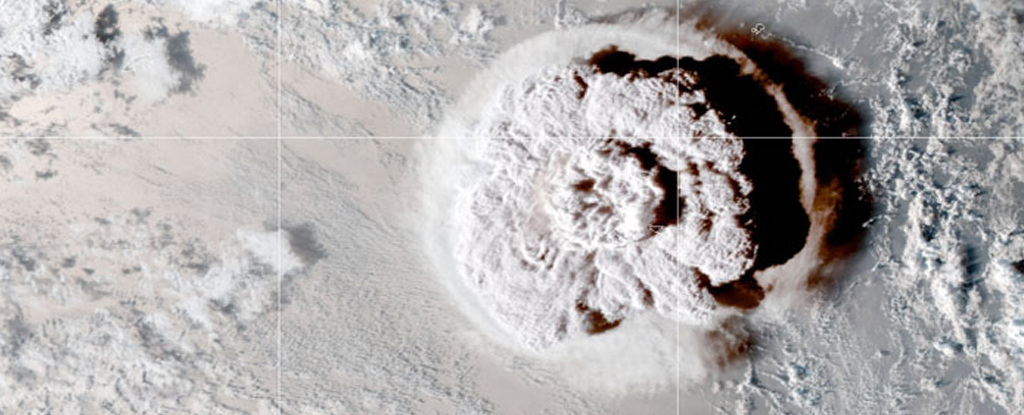 "Volcanic eruptions rarely inject much water into the stratosphere [See NASA Article Click Here]. In the 18 years that NASA has been taking measurements, only two other eruptions – the 2008 Kasatochi event in Alaska and the 2015 Calbuco eruption in Chile – sent appreciable amounts of water vapor to such high altitudes."
""The amount of water vapor injected into the stratosphere after the eruption of Hunga Tonga-Hunga Ha’apai (HTHH) was unprecedented, and it is therefore unclear what it might mean for surface climate. We use chemistry climate model simulations to assess the long-term surface impacts of stratospheric water vapor (SWV) anomalies similar to those caused by HTHH, but neglect the relatively minor aerosol loading from the eruption"". Footnote 1
""The simulations show that the SWV anomalies lead to strong and persistent warming of Northern Hemisphere landmasses in boreal winter, and austral winter cooling over Australia, years after eruption, demonstrating that large SWV forcing can have surface impacts on a decadal timescale. We also emphasize that the surface response to SWV anomalies is more complex than simple warming due to greenhouse forcing and is influenced by factors such as regional circulation patterns and cloud feedbacks"". Footnote 2
""This extra water vapor could influence atmospheric chemistry, boosting certain chemical reactions that could temporarily worsen depletion of the ozone layer. It could also influence surface temperatures."" NASA
Massive volcanic eruptions like Krakatoa and Mount Pinatubo typically cool Earth’s surface by ejecting gases, dust, and ash that reflect sunlight back into space.
In contrast, the Tonga volcano didn’t inject large amounts of aerosols into the stratosphere, and the huge amounts of water vapor from the eruption may have a small, temporary warming effect, since water vapor traps heat.
Expanding the Grid - a One Dimensional Strategy
- Details
- Written by: J C Burke
- Category: UK Energy Security
- Hits: 5005
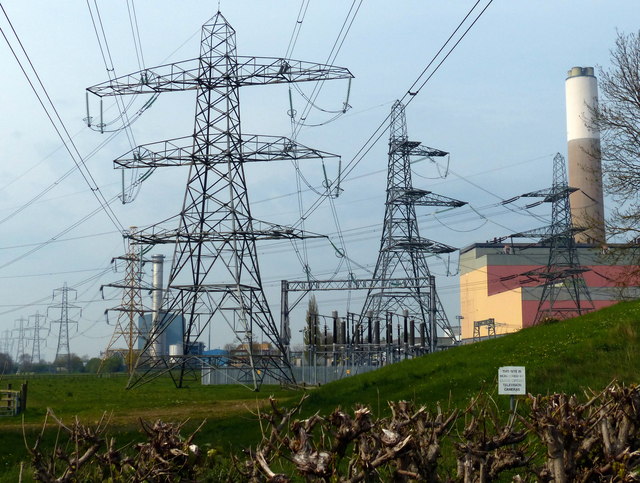 First and foremost the UK has several grids:
- The National Grid {Electricity Pylons and Infrastructure} Electricity is a Secondary Energy Medium
- The Gas Grid {Natural Gas - mostly methane, but other gases too in this "mix"} Natural GAS is a Primary Energy Source
- The Aviation Fuel and Oil Pipelines {as Refined Primary Energy Sources}
- Fibre Backbone - Communication and Control {including some of the above}
"National Gas Transmission is the backbone of Britain’s energy system today and we are working to play a leading role in the transition to a clean energy future that works for every home and business. We own and operate the national gas network, delivering energy to where it is needed in every part of the country."
"Gas is currently a critical part of Britain's energy needs. We keep households warm and underpin their quality of life. For business, we fuel growth and innovation, and we are looking to the future by developing the hydrogen transmission system of tomorrow." {more about the problems with Hydrogen Transmission - at the expense of Natural Gas - later}
But the Electricity Grid has a large % of electricity provided by the GAS GRID!
- "More clean energy for all: The Great Grid Upgrade will enable the electricity grid to carry more clean energy to communities in every part of England and Wales, helping us all reach net zero faster."
- "A grid that's fit for the future: As we continue to reduce our reliance on fossil fuels and increase clean energy generation, we’ll be using more electricity than ever. That means we’ll need a grid that’s able to carry all this extra electricity to wherever we might need it."
These are great marketing "messages" {or social massages} but not everything here makes logical sense! Now that "fossil fuels" have been discovered on Titan!
"Saturn's moon Titan has hundreds of times more liquid hydrocarbons than ALL THE KNOWN OIL AND NATURAL GAS RESERVES ON EARTH, according to new data from NASA's Cassini spacecraft." Source NASA 2008 So can we all dispense with the misnomer "Fossil Fuels" now?
So here lies the nub of the problem; DISINFORMATION - and predominantly from Governments and many agenda driven agencies.
So we need a coherent and INCLUSIVE energy strategy;
that includes generation/production/discovery {of primary energy}, distribution, Delivery and Efficient Technologies!
First Major Issue is the INEFFICIENCY of our {Mainly} CENTRALISED POWER GENERATION SYSTEM.
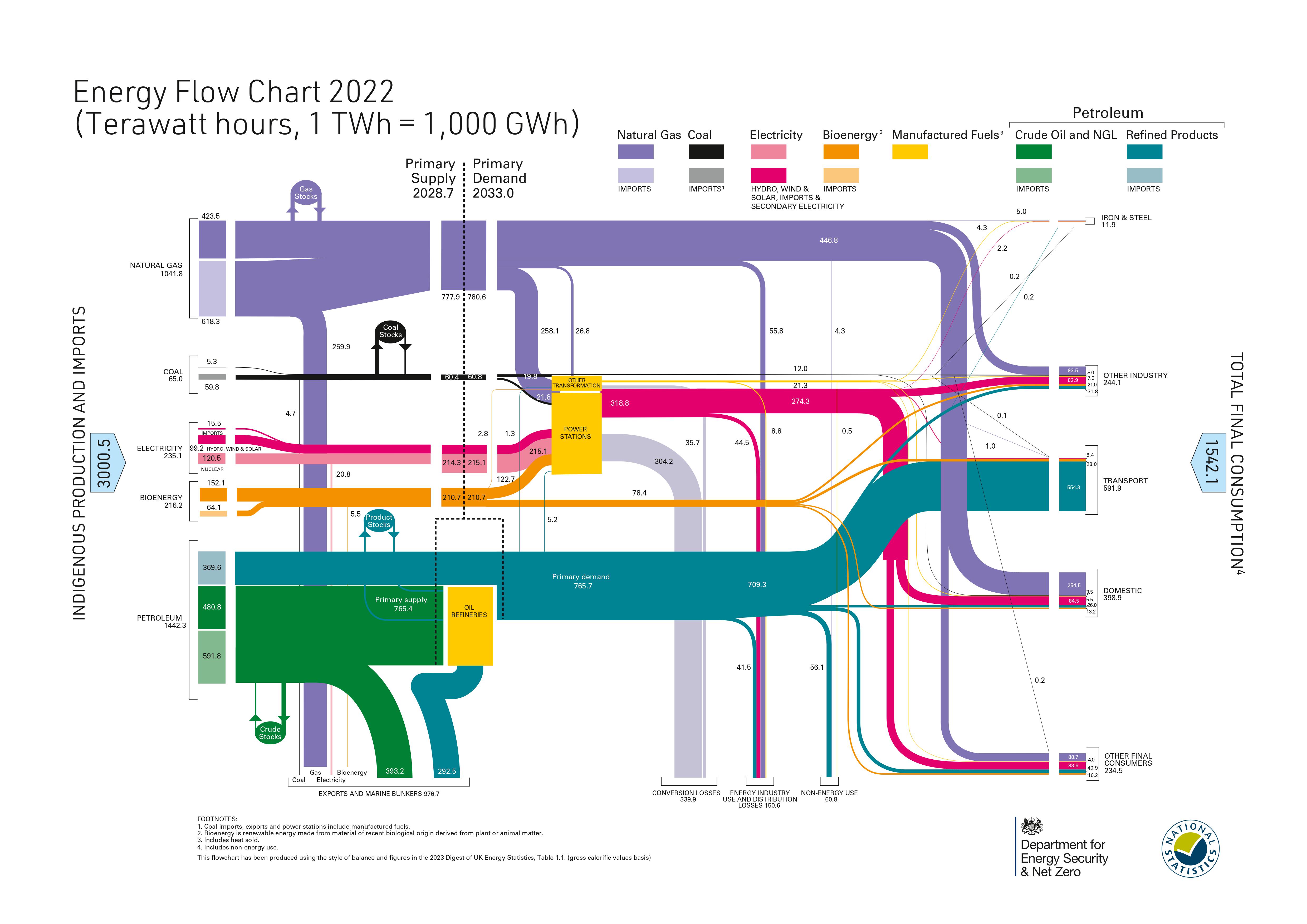 See previous articles to understand where the energy 'liberated' at the {traditional Power Station {Gas, Oil, Coal} Net Zero; EV Infrastructure Needs; Live Generation Mix - {this needs to be viewed at various times of the day & night}; AT BEST ONLY 35-40% of the Heat energy from Gas. oil or coal is used the generate ELECTRICITY {similar to the USA too}
So Centralised Power Generation is INEFFICIENT - therefore Expanding the Electricity Grid need to be considered within this context. So National Grid powered EVs and Heat Pumps can never be considered efficient and comparable with other sources of DECENTRALISED ENERGY GENERATION. Indeed many more householders must turn towards their own "Off-GRID" energy provision {Solar Thermal Panels, Solar PV Panels, Small Scale Wind {VAWT} and even Mini/Micro Hydro where applicable.
But the fakery of the current messages - and artificially inflated energy prices to the consumer must be challenged. We are all being taken as fools! The false gods of Climate change, CO2 reductions, 'Carbon Capture', Net Zero, Climate Emergency, Fossil Fuels and Just Stop must be cast out {of the church of logic}!! All this is simply {false} marketing-hype! in fact the cynicism is so bad, that they have truncated CO2 [Carbon Dioxide] to simply "Carbon" - which is you and I - is this a cull of the Human Race??.
Flooding Drainage and Buffering
- Details
- Written by: J C Burke
- Category: Technical Papers
- Hits: 5943
 At this time of year after 'excessive and continued' rains, several major Rivers are prone to breaching their banks. Especially the Trent around Derby and the upper reaches of the Thames. The accepted flood plain regions. However, this is a result of the river basin in total - and thus we need to look further upstream to see how this 'inundation' has developed.
Many commentators speak of problems with 'dredging and clearing waterways', sure this will {update- probably NOT[1]} help - but a major contributory factor has been overlooked, and something that was so common in the past that these so-called floods rarely occurred. This is the buffering aspects 'upstream' due to woodlands and hedges on our hill sides - to slow down the dumping of water within the water course(s). This is echoed, nicely with the extracts below from Erica Gies - who is advocating for a "Slow Water Movement"
Over the years, due to the partial 'industrialisation' of farming {as a business - rather than as custodians of the land} we have witnessed the removal of hedges, woodland strips, woodlands and other aspects that contributed to keeping water within the land itself. The fields that the farmers are utilising have become appreciably larger - by the removal of hedge-rows and woodland strips.
However research shows that this policy of "enlargement" carries additional risks in terms of rainfall interception: See full Research Here - CLICK
"Hedgerows can intercept a substantial fraction of the rainfall that would have fallen onto their projected ground area without their presence. The interception loss in two hedgerows in southern England was found to be 50–60% of gross rainfall in the summer and 40–50% of PG in the winter if related to projected ground area. In regions with climates characterised by high windspeeds, wind-driven rainfall plays a major role in the hydrology of hedgerows."
"A rainfall shadow of a width similar to the height of the hedgerows is found downwind of them and some rainfall concentration can occur near their upwind edge. The analytical model of rainfall interception (Gash, 1979), which was previously used for extensive forests, can be parameterised for hedgerows and reliably predicts their interception loss on the basis of daily rainfall data."[2]
These intercept number are highly significant - 50% of the rainfall. Therefore without these hedgerows that rainfall is draining from the land and into the water courses - and onto our Rivers. The situation with multiple hedgerow removal has to be considered too.
[1] Slow Water Down - not Speed it up! The slow water movement is about empowering individuals and communities, as well as governments, to help restore earth’s water cycles. Here is Erica Gies website where you can find out more. https://slowwater.world See the Read More Section too;
[2] Measuring and Modelling the Rainfall Interception Loss by Hedgerows in Southern England: Mathias Herbst, John M. Roberts, Paul T.W. Rosier, David J. Gowing: The Open University, Department of Biological Sciences: Received 9 June 2006; received in revised form 22 September 2006; accepted 23 October 2006.
Cold Feet about Nett Zero
- Details
- Written by: J C Burke
- Category: Net Zero Critique
- Hits: 15462
 Our article entitled "Net Zero they do not have a Clue" has garnered a big responce, we penned it on 22nd June 2023 with a big section devoted to the Parliamentary debate covered by Hansard.
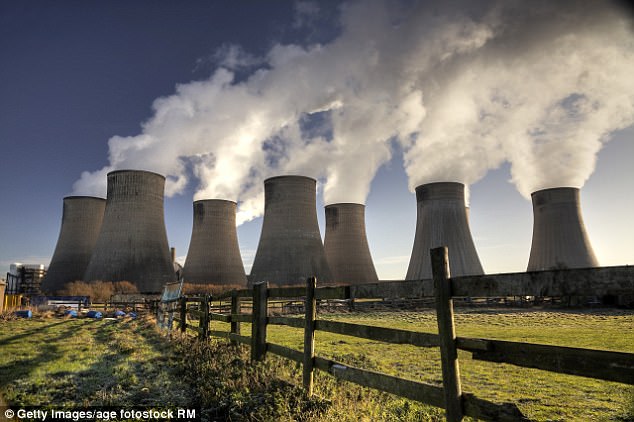
The image shown is part of the problem: 8 cooling Towers sending 65-70% of the Heat Energy in a Centralised Electricity Generating plant up into the sky! This cannot continue - Generation INEFFICIENCY is a major issue with the Centralised Power Network, both in the UK and other nations. It is too inefficient - so those EV vehicles getting their {electrical} charge from the 'mains' are just "importing" their waste.
But now Reuters reports, of news from Shell and BP, tends to indicate serious reservations - and thus COLD FEET!! Litterally!
See the Reuters Report in Full below: Web Linkage: https://1.reutersevents.com/LP=36061,
""Net zero and hydrocarbons – a case of and, not or""
""Media reports that Shell is taking an axe to jobs in its low-carbon solutions and hydrocarbon units -- Reuters reporting in October that around 15% of the Anglo-Dutch supermajor’s workforce would be cut -- have reinforced concerns that the industry’s commitment to net zero may be eroding in a high commodity price climate.
According to the reports, 200 jobs will go in 2024, with another 130 will be placed under review by the company.
The news represents a potential challenge for a company whose low-carbon division was intended to spearhead a transition to clean energy.
But it is not alone. BP – the first oil major to set a course to net zero back in 2020 – has also faced criticism from environmental activists over a scaling back of ambitious emission reduction targets. Climate-focused investors reacted negatively to BP’s February 2023 announcement that it would aim for a 20-30% cut to emission by 2030, compared to 35% previously.
Cold Feet about Nett Zero (2)
- Details
- Written by: J C Burke
- Category: Net Zero Critique
- Hits: 2483
Our article entitled "Net Zero they do not have a Clue" has garnered a big responce, we penned it on 22nd June 2023 with a big section devoted to the Parliamentary debate covered by Hansard.
The image shown is part of the problem: 8 cooling Towers sending 65-70% of the Heat Energy in a Centralised Electricity Generating plant up into the sky! This cannot continue - Generation INEFFICIENCY is a major issue with the Centralised Power Network, both in the UK and other nations. It is too inefficient - so those EV vehicles getting their {electrical} charge from the 'mains' are just "importing" their waste.
But now Reuters reports, of news from Shell and BP, tends to indicate serious reservations - and thus COLD FEET!! Litterally!
See the Reuters Report in Full below: Web Linkage: https://1.reutersevents.com/LP=36061,
""Net zero and hydrocarbons – a case of and, not or""
""Media reports that Shell is taking an axe to jobs in its low-carbon solutions and hydrocarbon units -- Reuters reporting in October that around 15% of the Anglo-Dutch supermajor’s workforce would be cut -- have reinforced concerns that the industry’s commitment to net zero may be eroding in a high commodity price climate.
According to the reports, 200 jobs will go in 2024, with another 130 will be placed under review by the company.
The news represents a potential challenge for a company whose low-carbon division was intended to spearhead a transition to clean energy.
But it is not alone. BP – the first oil major to set a course to net zero back in 2020 – has also faced criticism from environmental activists over a scaling back of ambitious emission reduction targets. Climate-focused investors reacted negatively to BP’s February 2023 announcement that it would aim for a 20-30% cut to emission by 2030, compared to 35% previously.
Page 8 of 11